Tell us about the job
Takes about a minute. No obligation.
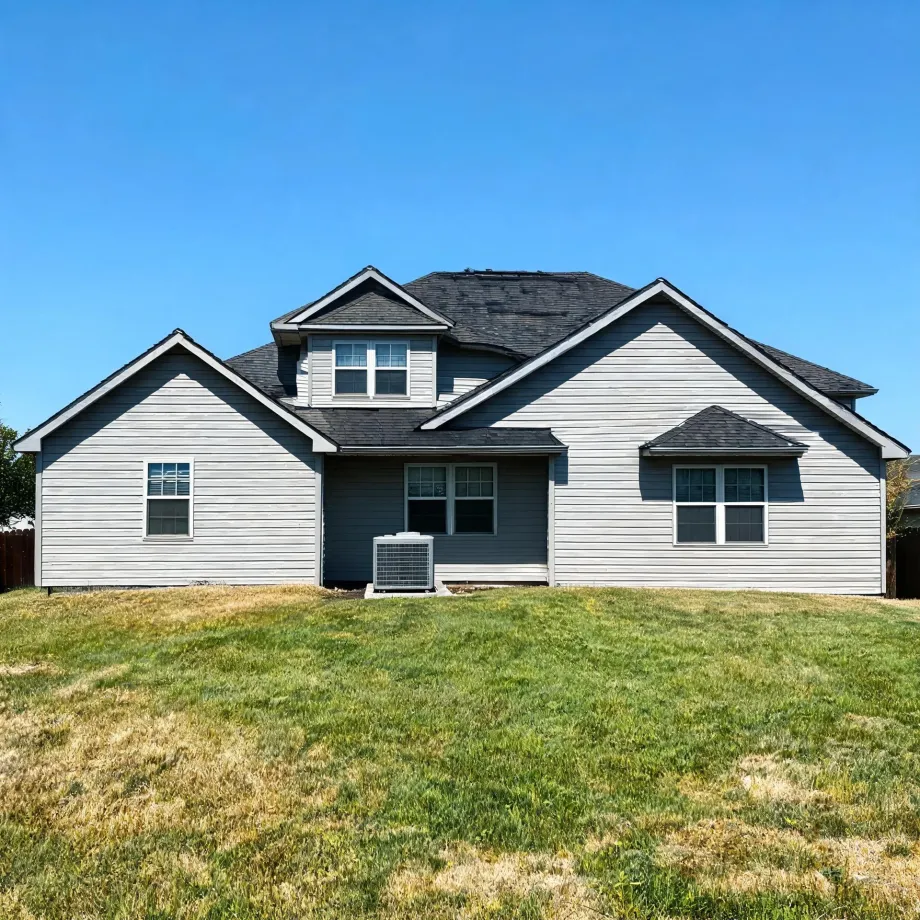
A central AC system that sat off all winter and most of spring can look fine right up until it does not start. Homes in Fresno County, CA run cooling about two months a year, from July through August. Contactors corrode during idle months, and a compressor that started weakly last August may not start at all this July. A contractor diagnosing a no-cool call here checks the contactor, the capacitor, and the compressor draw before anything else, because those are the parts that fail on the first hard start after a long off period.
Half the homes in Fresno County, California were built in 1982 or earlier (2020-2024 ACS 5-year). A central AC system running in a house of that age has often been replaced at least once, meaning the equipment a contractor opens is not necessarily as old as the walls around it. What matters on a repair call is what that opened system actually requires: whether the failed component, a capacitor, a contactor, a refrigerant-circuit part, is still in production for that make and model. When it is not, the job changes from a repair to a replacement conversation, and the age of the housing is a secondary factor at that point.
The Parts of a Central AC a Contractor Checks During a Repair
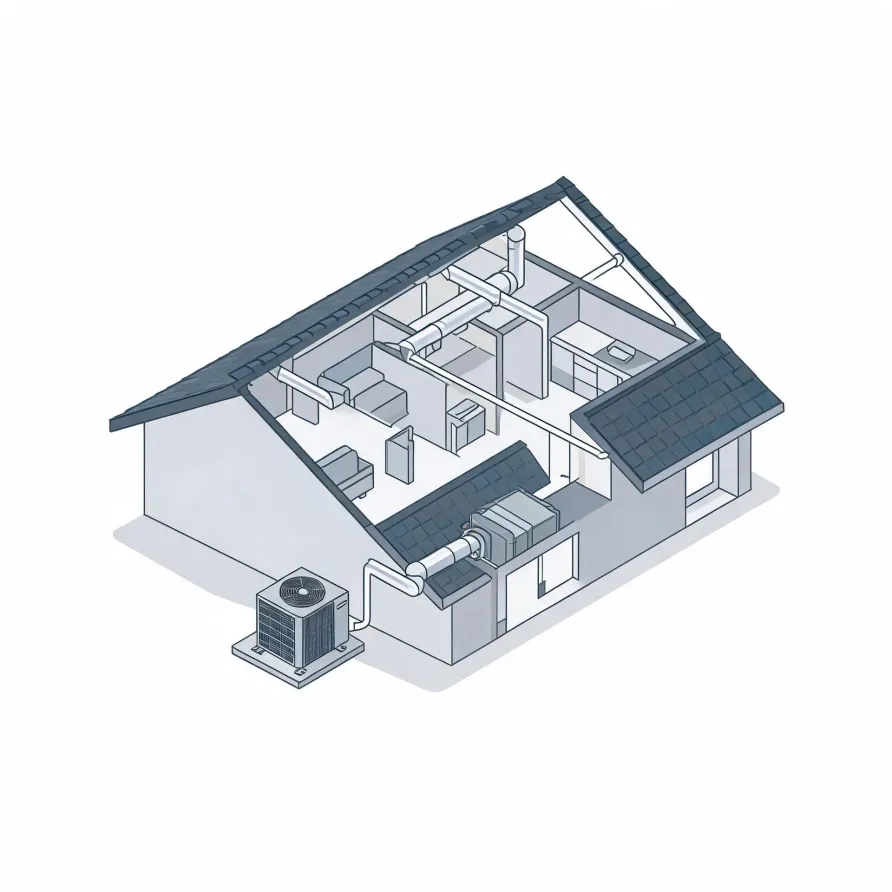
The outdoor condenser unit sits outside the house, usually on a concrete pad along an exterior wall, and it is where heat pulled from inside gets released. The indoor air handler or furnace coil sits inside, often in a closet, basement, or attic, and it is the side of the system where refrigerant absorbs that heat. When a repair call comes in, these two units and the refrigerant lines running between them are where a contractor starts.
The thermostat is what the homeowner touches, and a fault there can mimic a much larger problem, so contractors check it early. The condensate drain line runs from the indoor coil to a nearby drain, and a clog there can shut the system down as a safety measure. The disconnect box near the outdoor unit is also part of what a contractor looks at before going further.
The drawing shows the general layout of a central AC system, and a licensed contractor determines what applies to your specific house and equipment.
Get matched in Fresno CountyFresno County, by the numbers
378 severe weather events were recorded in Fresno County, California between 2015 and 2024.
NOAA National Centers for Environmental Information, Storm Events Database, bulk CSV export, events 2015-01-01 through 2024-12-31.Half the homes in Fresno County, California were built in 1982 or earlier (2020-2024 ACS 5-year).
U.S. Census Bureau, 2020-2024 American Community Survey 5-Year EstimatesFresno County, California holds 344,894 housing units (2020-2024 ACS 5-year).
U.S. Census Bureau, 2020-2024 American Community Survey 5-Year EstimatesOwners occupy 55.5% of the occupied homes in Fresno County, California (2020-2024 ACS 5-year).
U.S. Census Bureau, 2020-2024 American Community Survey 5-Year EstimatesCodes & Standards Covering Central AC Repair in Fresno County, California9 sourced rules and standards
What happens when a contractor comes out
Split-system central air conditioners rated below 45,000 Btu/h manufactured on or after January 1, 2023 must meet a federal minimum of 13.4 SEER2.
Split-system central air conditioners rated at or above 45,000 Btu/h manufactured on or after January 1, 2023 must meet a federal minimum of 13.4 SEER2.
Split-system central air conditioners manufactured between January 1, 2015 and December 31, 2022 had to meet 13 SEER, the metric that preceded SEER2.
Single-package central air conditioners manufactured on or after January 1, 2023 must meet a federal minimum of 13.4 SEER2.
Space-constrained central air conditioners manufactured on or after January 1, 2023 must meet a federal minimum of 11.7 SEER2.
Federal efficiency standards for split-system central air conditioners and heat pumps are set on each certified combination of outdoor unit and indoor coil rather than on the outdoor unit alone.
Residential and light commercial air conditioning and heat pump systems assembled in the field, including mini-splits and unitary systems, may not be installed on or after January 1, 2025 using a refrigerant with a global warming potential above 700.
A field-assembled system whose specified components were all manufactured or imported before January 1, 2025 carries no installation compliance date under the refrigerant restrictions and may still be installed.
Licensing Rules for HVAC Repair in Fresno County, California
California requires a state contractor license: it is a misdemeanour to engage in the business of, or act in the capacity of, a contractor in California without one, unless the work is exempt.
Severe Weather Events in Fresno County
Fresno County's climate puts real stress on central AC systems, and that stress compounds over time with each weather event that pushes equipment past normal operating conditions. Repair demand here is shaped by local conditions, and this chart reflects the record those conditions have built.
378 severe weather events, 2017–2024. Source: NOAA National Centers for Environmental Information, Storm Events Database.